
Picking the product, and the shop behind it, before money moves
Stage two is the cheapest place to avoid a mistake. Everything here happens before you pay, so every question you ask now is free.
Three roads to the same product page
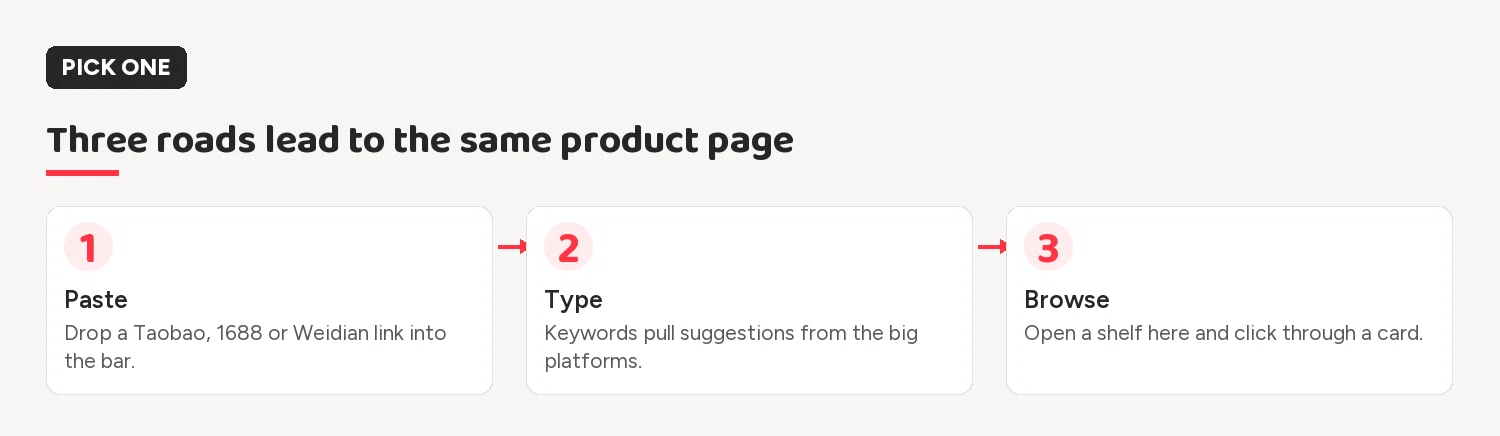
Every Fansbuy order starts on a Fansbuy product page, and there are three ways to get there. Paste a link from Taobao, 1688 or Weidian into the search bar. Type keywords and let Fansbuy fetch matching listings from the big platforms. Or browse a shelf in the product catalog, open a card, and carry its source link back to the bar.
Pasting a link is the most predictable road, because you know exactly which listing you will get. Keyword search is wide and noisy: results arrive machine-translated, often sorted by sales, and many of them are near-identical listings from different shops. The catalog route sits in between, since someone has already sorted listings by product type.
The search bar and its three badges
On fansbuy.com the search bar is a black capsule with the prompt "Start by searching with a URL, or keyword". Three round badges inside it stand for Taobao, 1688 and Weidian, the marketplaces it reads. Next to them is a camera icon for image search, which looks for matches on 1688 and Weidian.
Product pages built from these platforms get their own address on fansbuy.com, so a listing you found once can be bookmarked and reopened. JD also appears on Fansbuy’s platform list. Anything the bar cannot read goes through Fill&Buy, a form where you type the product details yourself.

Reading a catalog card in thirty seconds
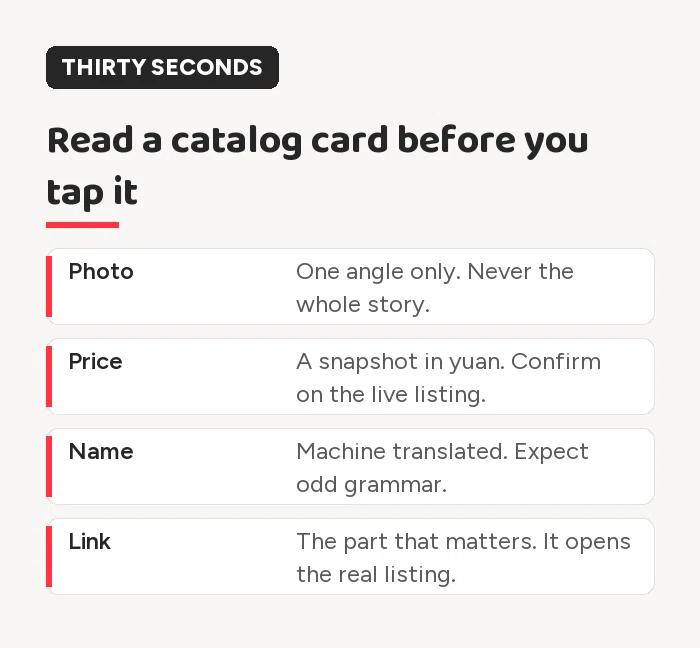
A product card in the catalog carries four things: one photo, a price in yuan, a translated name and a link. Only the link is reliable. The photo is a single angle the seller chose. The price is a snapshot that may be days old and is often the cheapest option in a range. The name is a machine translation that can mix several products into one title.
So treat a card as a pointer. Open it, follow the source link to the live listing, and judge the listing itself. If you are deciding what to buy between several similar cards, open each one side by side and compare the seller’s measurement charts rather than the cover photos.
Judging the listing and the shop behind it
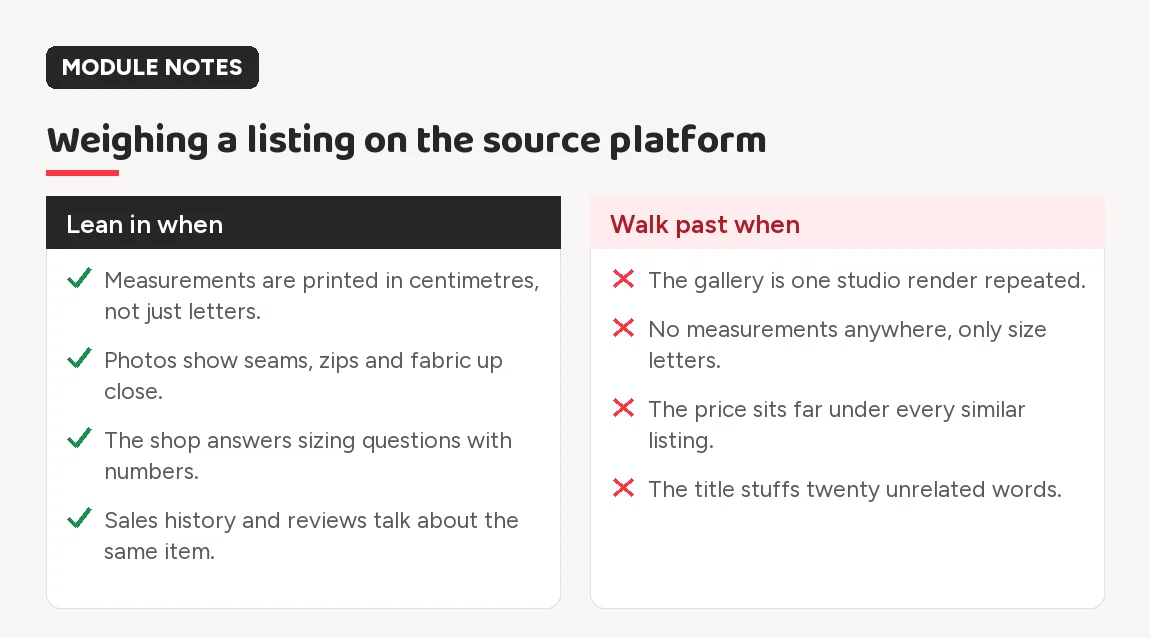
Good sellers make their listings easy to check. Look for measurements in centimetres for each size, not just S, M and L; several photos of the actual product, including close-ups of seams, zips and fabric; and a shop that answers sizing questions with numbers. On Taobao, a monthly sales count and reviews that mention the same item you are looking at are both useful. Shop level badges help a little, but a young shop with clear photos can be a better bet than an old one with vague ones.
Weidian shops often show no reviews at all, so the photos and the measurement chart carry more weight there. 1688 is a wholesale marketplace: prices are tiered by quantity and many listings have a minimum order. If the price you see only applies from ten pieces, a single piece will cost more.
Signs to walk past: one studio render repeated across every colour, no measurements anywhere, a price far below every similar listing, or a title stuffed with twenty unrelated words. None of these prove a problem. They just mean you will learn about the item at stage four instead of now.
A caution list before a Fansbuy payment clears
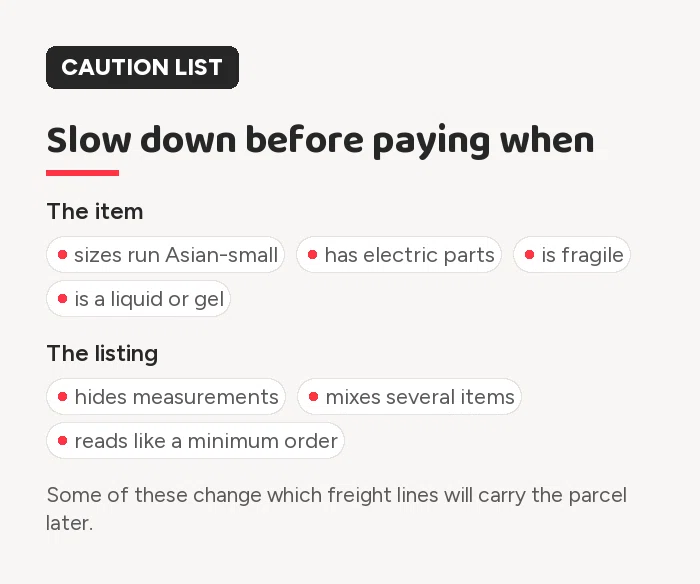
A few kinds of item deserve a slower look before you pay. Chinese sizing usually runs smaller than European or American sizing, so compare the chart with a garment you own. Anything with a battery or electric parts, anything fragile, and any liquid, cream or gel limits which freight lines will accept the parcel later, and some lines refuse them outright.
Watch out for listings that bundle several products under one price, where the cheapest option sets the headline number, and for 1688 listings that read like minimum orders. If a listing is unclear, write your question in the remark field on the Fansbuy product page, or ask before ordering through support. Asking costs a day; a wrong size costs a return fee and a week.
Fansbuy also states that it does not verify whether goods sold by third-party sellers are authentic, and its Terms of Service forbid buying counterfeit goods through the service.